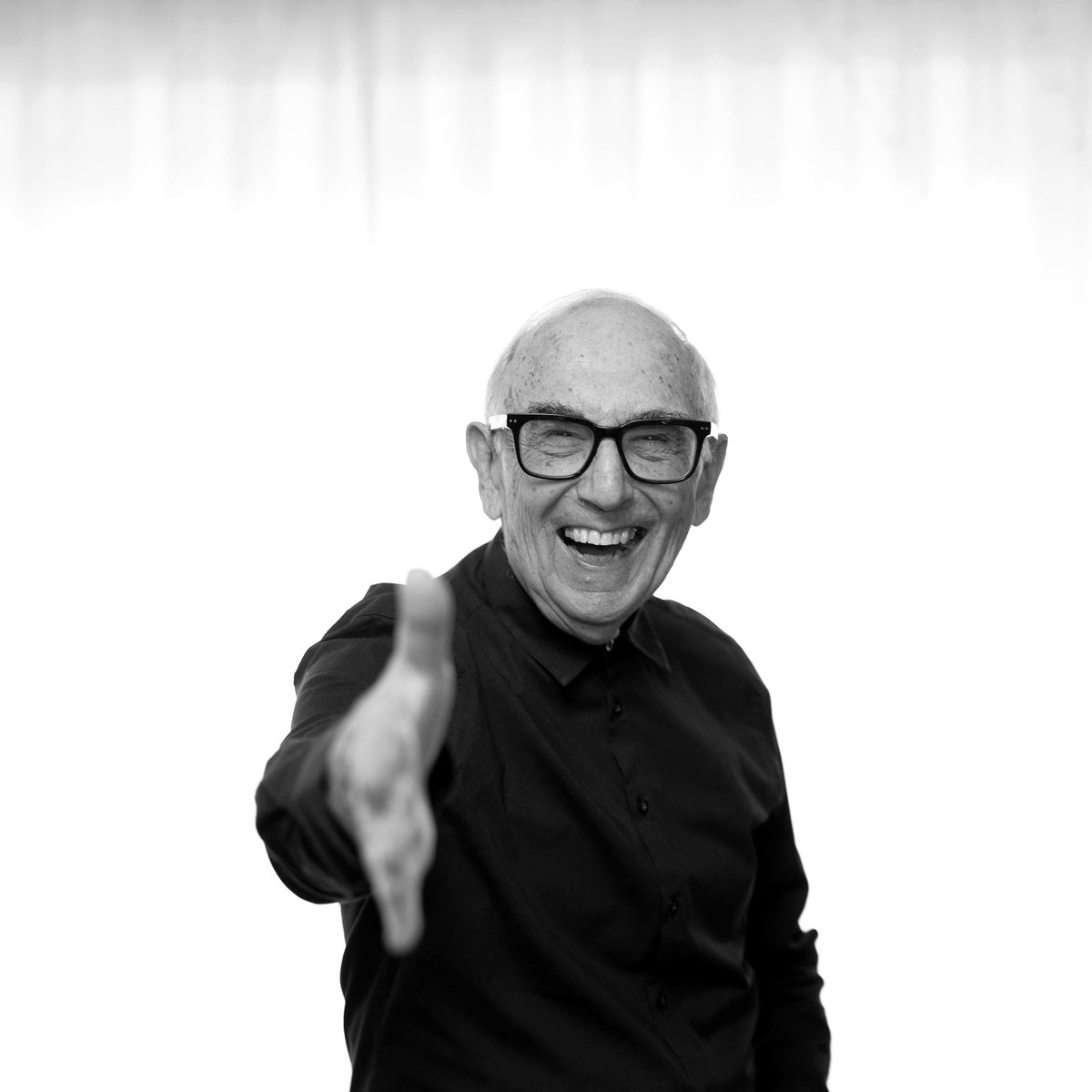
“Knowledge is dangerous without experience.”
01
A boy from the East End
Mike was born in October 1942 and grew up in the East End of London among the bomb sites. At fourteen he walked through the door of the Brady Boys' Club, the first Jewish boys' club in the country. “I was like a duck to water,” he says. “The minute I walked through that door, I was there.”
Brady gave him Yogi Mayer, the club leader who opened doors for him, and it gave him weekends at Skeet Hill House in Kent. That is where he met Rita, one of twelve Bloom children, whose family took him in as one of their own. They married in 1964. Rita, his late wife and the love of his life, sits at the heart of this whole story.
He left Central Foundation Boys' School in the City at sixteen with no job to go to. Then he saw an old American film on the BBC about an advertising man stuck at a blank drawing board until the idea arrived at two in the morning. “That was my eureka moment.” Asked at interview what he knew about marketing, he described two freezing winter weekends running a costume jewellery stall in Petticoat Lane.
“Advertising is only part of marketing. And a market stall, that's marketing too.”Mike, on the Petticoat Lane stall
02
The lowest form of plant life
In November 1959 Mike started in the despatch room at Colman, Prentis and Varley in Grosvenor Street. Six months later a vacancy came up in the media department. Five other messengers turned it down, because media was, in Mike's words, “the lowest form of plant life”. He said yes, and went to evening classes in statistics and economics to learn the numbers behind it.
In 1965, aged 22, he moved to McCann Erickson as a media group head. When his boss proposed splitting planning from buying, Mike threatened to resign: “You can't separate planning from buying.” In 1968, at 26, he was Media Director and on the board. Around the same time he became the youngest ever Fellow of the IPA.
In 1973 Frank Lowe hired him to run media at Collett Dickenson Pearce, the agency behind the Hamlet and Hovis ads. On his first evening he sat alone in the basement and watched the agency's famous reel. He had never seen most of it. “Why was I not seeing these commercials?” The answer was that a busy man who got home late watched little television, and the ads were running where he would never catch them. From that came his thinking on light viewers, and on buying for influence as much as for reach.
Then he read the Thames Television rate card closely and saw that a sixty-second slot cost only half as much again as a thirty. Cut into three twenty-second spots, it was a bargain. Thames agreed to the split. He then sold the idea to every ITV sales director, and the twenty-second commercial became a standard length. For the launch of the Ford Capri he bought every 48-sheet poster site available, around 4,000 posters, and in 1976 he set up Portland Outdoor with J Walter Thompson to bring order to the poster business.
“Mike Yershon was the most influential media guy in town. Mike was a game changer.”
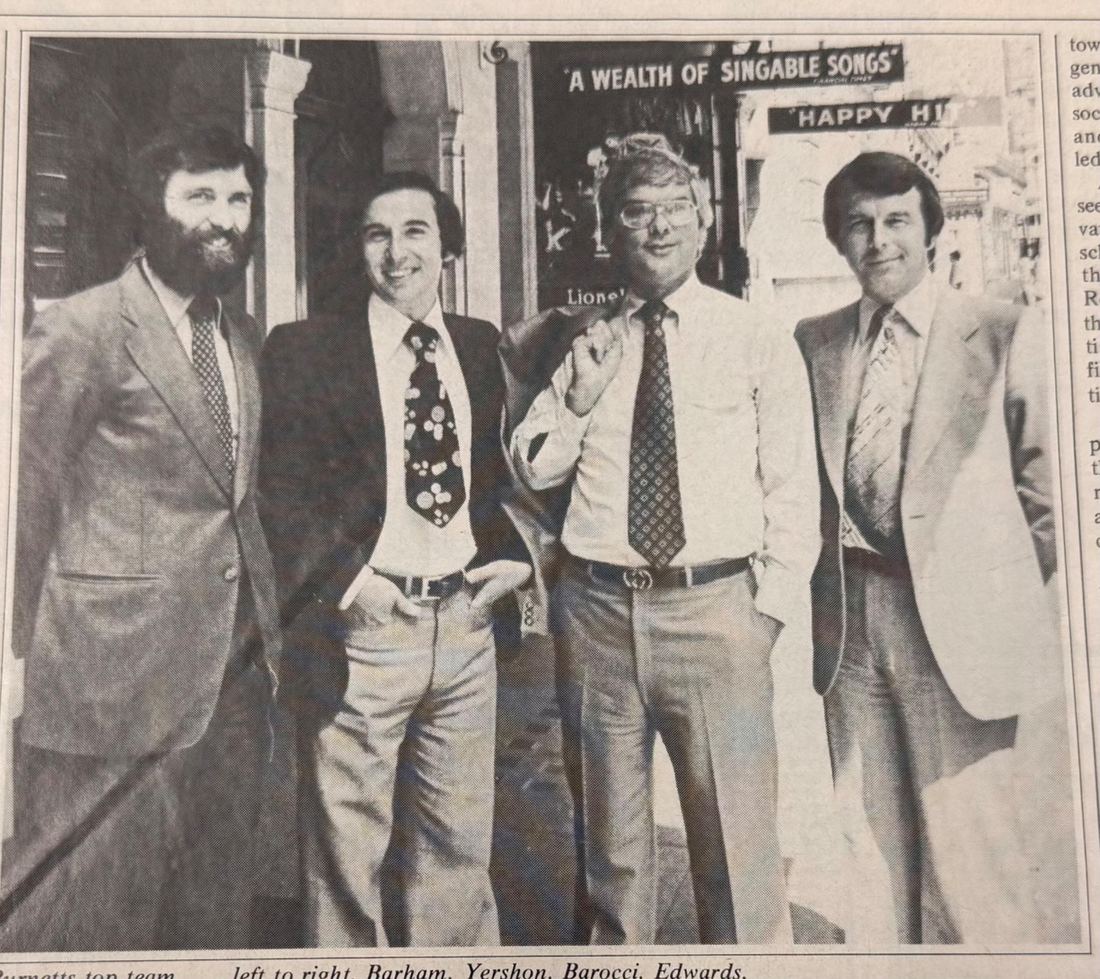
In 1978 Leo Burnett slid a signed blank cheque across a breakfast table at the Hyde Park Hotel and asked him to fill in the figure. He joined as Vice Chairman, in charge of media and research with sales promotion alongside, and by the spring of 1980 he judged the job done.
03
Above the shoe shop on Bond Street
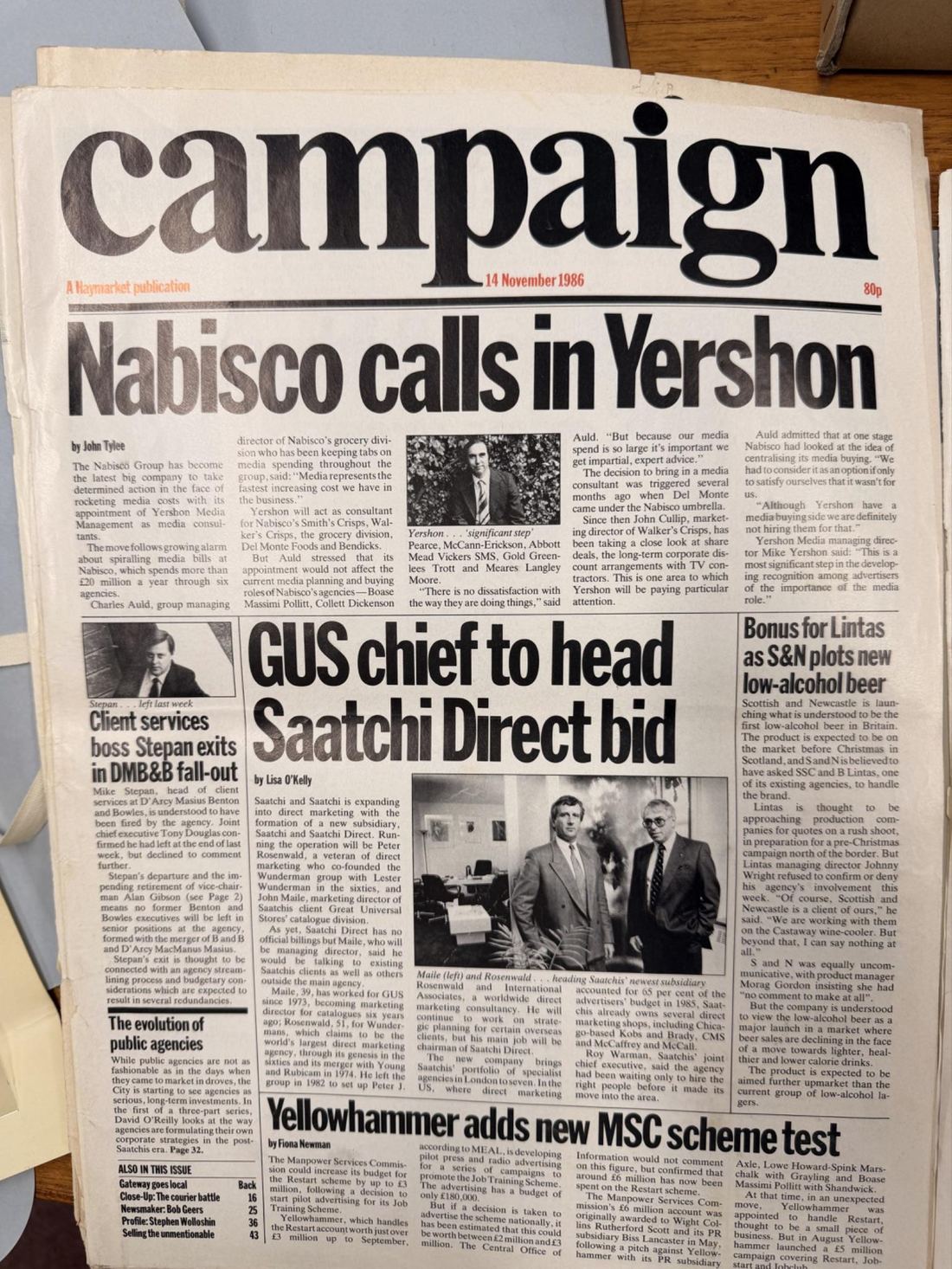
On 1 April 1980 Mike opened Yershon Media Management in 500 square feet above a shoe shop at 29 New Bond Street. There was no electricity and the phone line had not arrived, so Rita worked from day one on the telephone belonging to the man upstairs. There was enough money for three months. “Rita was beside herself,” he remembers. “I was relaxed. I can always go and get a job as a media planner.”
Birds Eye signed that summer, days before the money would have run out. Heinz and Seagram said yes at Christmas. Guinness, Renault, Nationwide and ASDA came later, and Yershon Media became known as the UK's first strategic media planning company.
In March 1981 the Football League came to him wanting more money from television. Mike proposed taking matches out of the Saturday three o'clock slot and offering them live, on Friday nights to the BBC and on Sunday afternoons to ITV, so the two would bid against each other. The League's president called it impossible. “They threw me out the meeting,” Mike remembers. “But then they called me back.” He had walked forty minutes back to Bond Street and the phone was already ringing. Live league football on television started from that idea, and the fans kept coming to the grounds.
That August he signed the founding paper of the Association of Media Independents alongside nine rivals, and in November 1982 he added Yershon Media Buying. He helped Thames design the rate card for the launch of Channel 4. On a yacht off Monaco, with a projector and a stack of acetates, he summed up the new channel for the industry as “just more television” and got a standing ovation. In 1985 he met Peter Wood, then running five people out of half a floor in Croydon, and helped him take Direct Line onto television. Their working friendship has now lasted forty years.
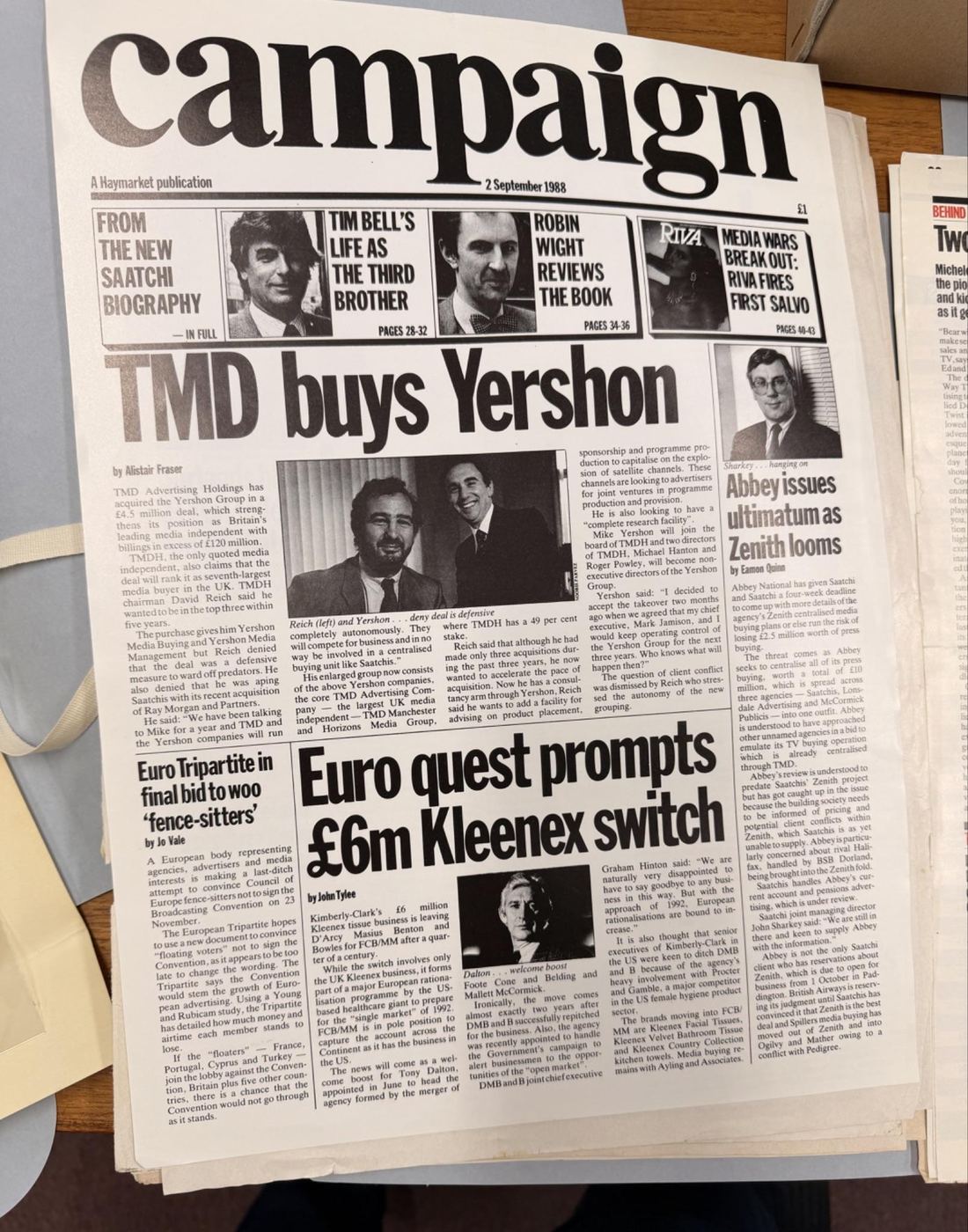
On 30 August 1988, his wedding anniversary, Mike sold the Yershon companies to TMDH. “I've always been happy to pay the tax. You wouldn't be paying it if you weren't earning.”
04
Below the radar
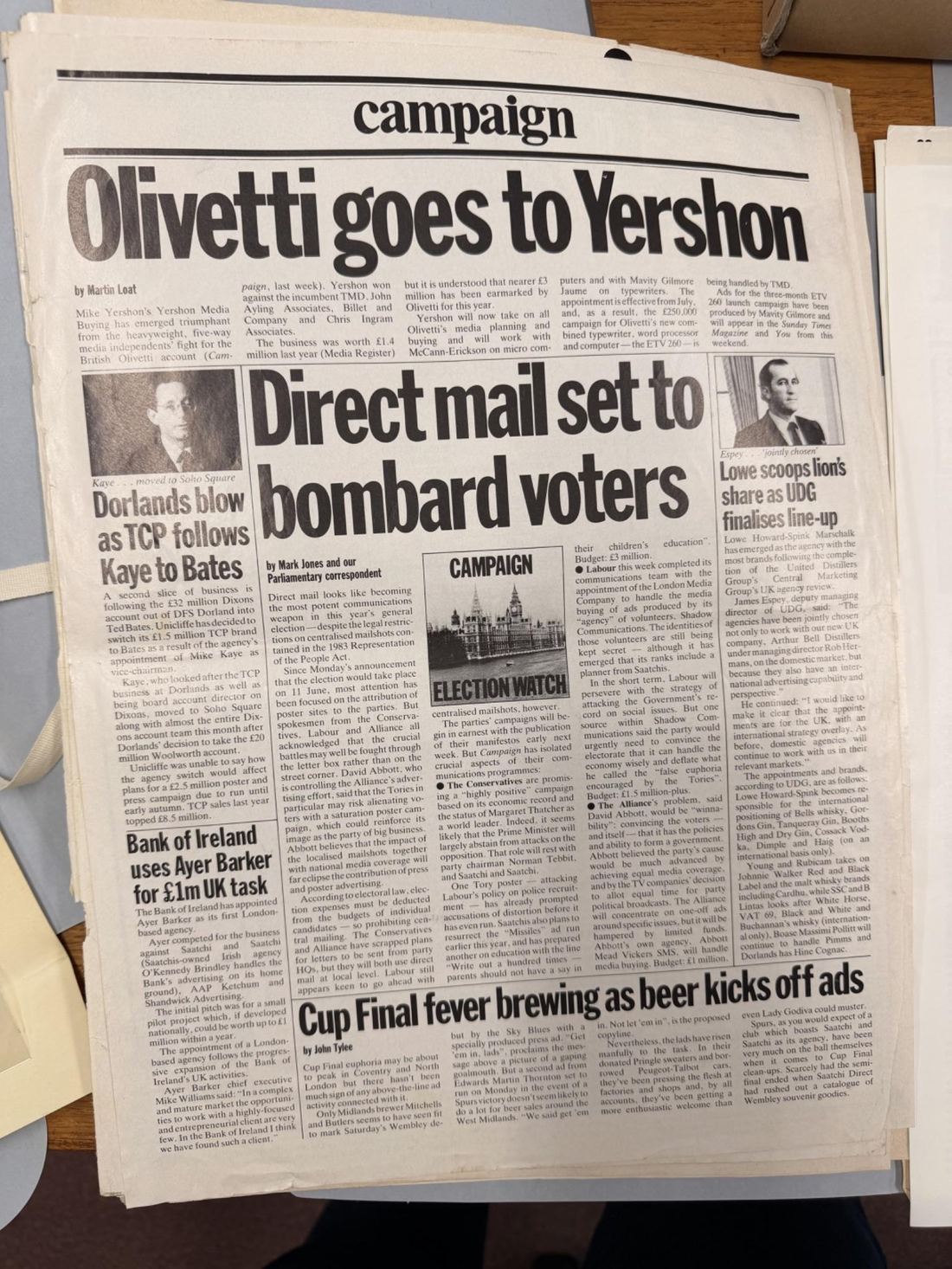
Mike joined the TMDH board and chaired the Yershon companies through a three-year earn-out. When Aegis bought TMDH in 1991 he became a founder director of Carat UK. In 1992 McCann Erickson asked him back as Media Director, on a contract he wrote himself, to save the Coca-Cola and Nescafé accounts. He kept both, won Panasonic and left at the end of 1993.
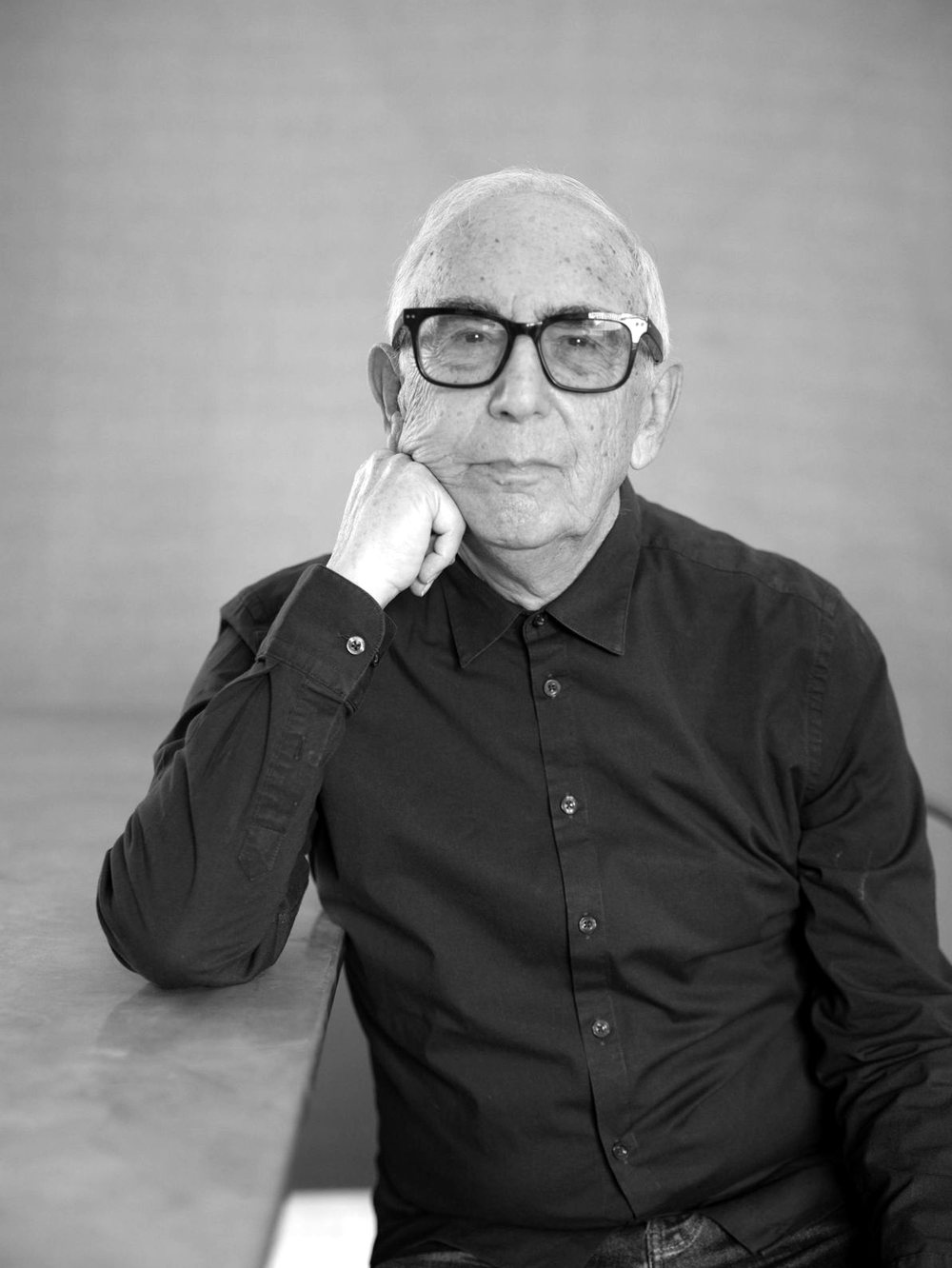
Early in 1994, walking a beach on Cape Cod into the evening sun, he noticed he was looking at his feet. He made himself look up at the horizon, and he thought: twenty years.
That first twenty-year plan ran from 1994 to 2014. He set up his own consultancy, Media Assessment, and kept it to a handful of clients at a time, working directly with chief executives on where their money should go. With Peter Wood he helped launch Direct Line Financial Services in 1994 and Esure in 1999. He helped Standard Life open its bank and helped build Intelligent Finance from a greenfield site. Later came Gocompare, where from 2017 to 2019 he advised the chief executive of GoCo Group, including on the launch of the switching service Weflip.
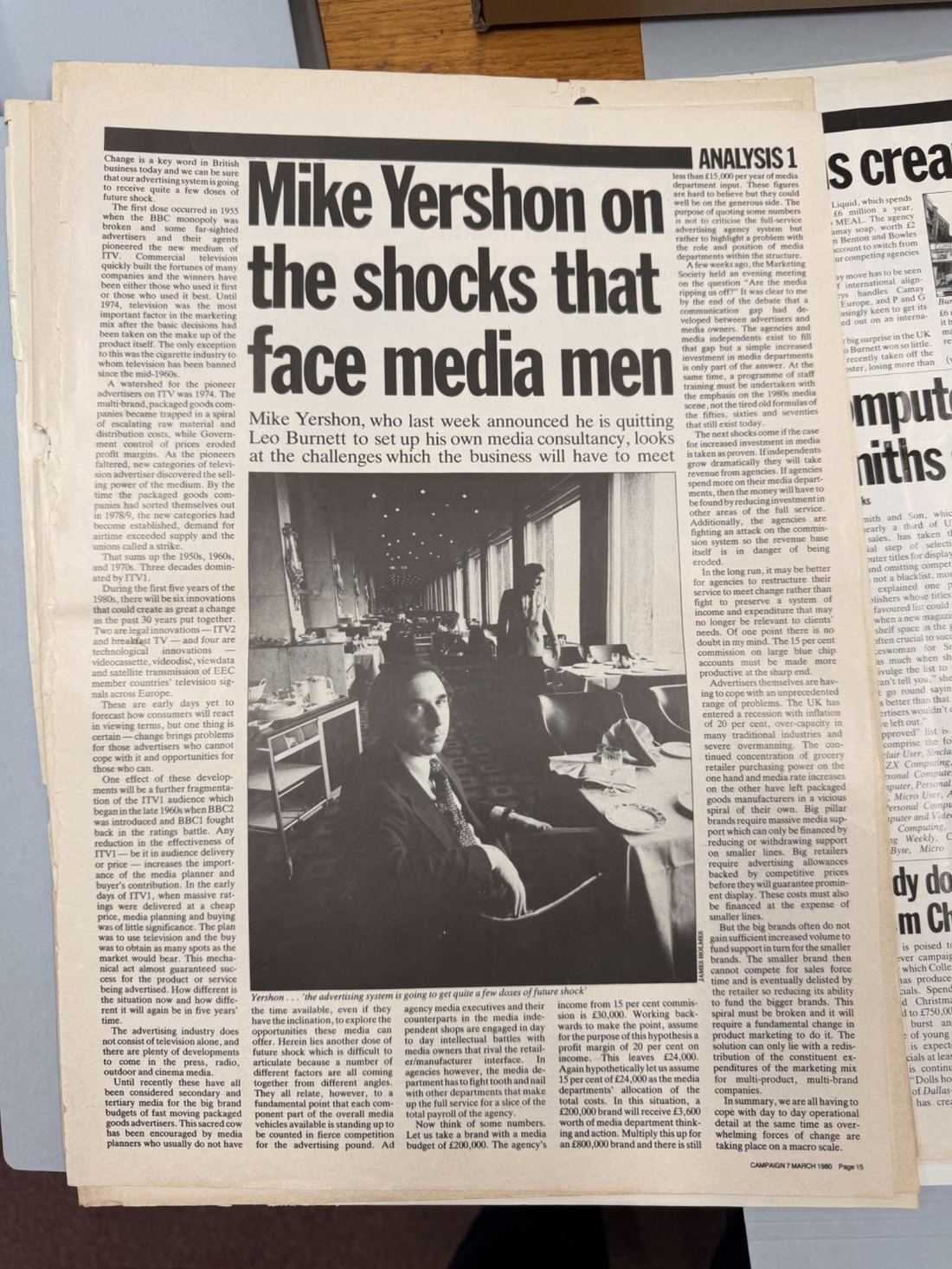
He kept writing for the trade press, often about transparency in how media is bought, and in 2017 the IPA's centenary list named him among the game changers of British advertising's first hundred years.
His daughter Nicole followed him into the business in the late 1980s, on the creative side. In her book Rough Diamond she remembers people hearing her surname and asking if she was any relation, “because he was in Campaign every week”. His advice to her stuck: “Unless you are moving forward then you're going backwards.”
“Have a plan. Develop your story. Control your agenda. Take your corners slowly but just do it.”Mike Yershon
05
Putting back
Mike has been giving his time away for more than forty years, and he has never been paid for any of his mentoring. In his own telling, his payment is seeing other people succeed.
Stephen Allan is the proof. At eighteen, with no degree, he wrote to eighty companies and got eighty rejections. Mike gave him work experience at Bond Street and a reference. Allan wrote to the same eighty again, got interviews and offers, and went on to become Worldwide Chairman and CEO of MediaCom.
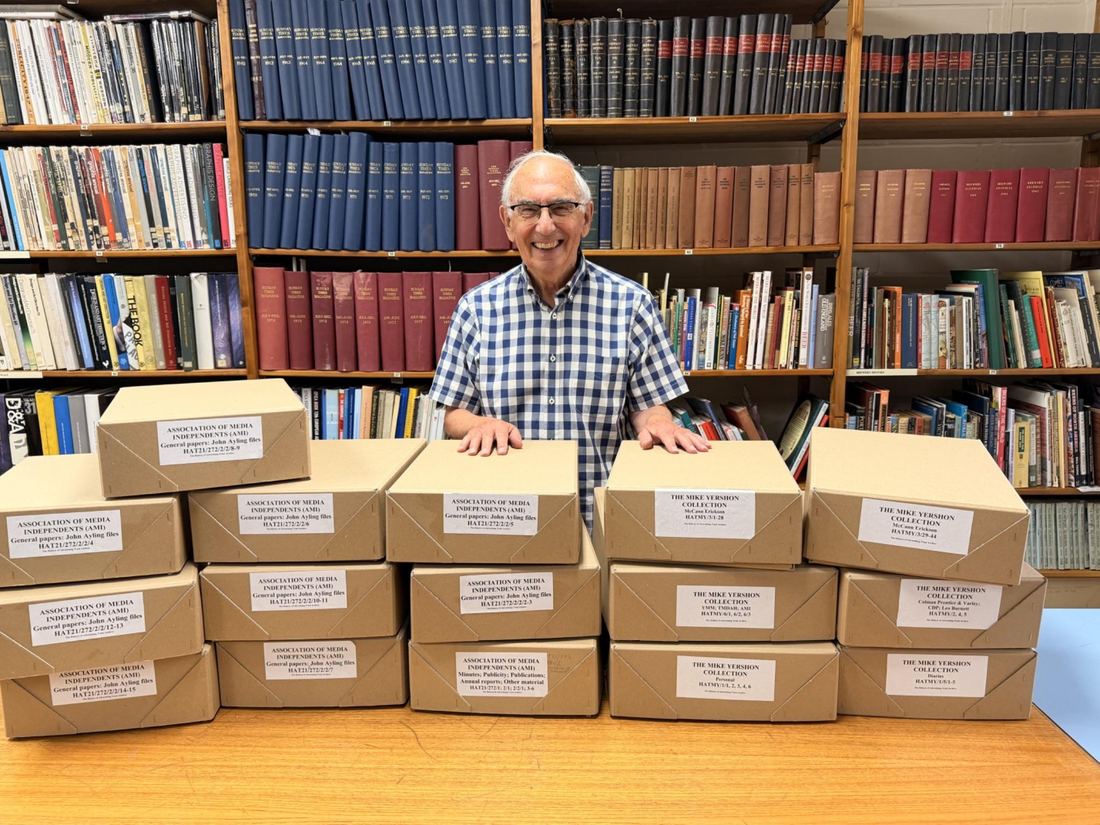
He has helped keep Skeet Hill House going for decades, and he helped rescue the Brady Clubs' old photographs from carrier bags, saw a thousand faces named and the collection placed at the Bishopsgate Institute. He went back to his old school as a governor in the 1980s and became a trustee of the Central Foundation Schools of London in 2019. For its pupils he built “Learning By Example”, a career ladder drawn from six decades of work in an industry everyone touches every day. In 2021 his own papers went to the History of Advertising Trust: fifty-one boxes.
“I can't stop thinking in terms of putting back.”
- Trustee since 2019Central Foundation Schools of London
- Former governorCentral Foundation Boys' School
- ArchiveThe Brady photographs, Bishopsgate Institute
- SupporterSkeet Hill House, Kent
- PapersHistory of Advertising Trust
06
The second plan
On 19 November 2019 seventy people filled the library at Shoreditch House for the Fearless Breakfast. Tickets sold out in two hours. Nicole, his daughter, was the MC. Gemma Greaves of the Marketing Society opened on fearlessness and Dave Trott told the light viewer story from the stage. Then John Caswell sat down with Mike for a fireside conversation about what comes next.
Mike announced his second twenty-year plan. He had weighed up becoming an entertainer or a politician before he chose to stay an entrepreneur. “I don't want to look back over the 20 years and think I've done nothing particularly, just vegetated.” The plan runs to 2039, when he will be 97. Part of it is putting back into his East End roots and into his old school, where he wants former pupils to mentor the ones about to leave.
Since then he has built a new kind of agency model with Nicole and John, and he still works directly with chief executives on media and growth. He is teaching himself bridge and plays chess like a conversation. In July 2026 he spent a day going through his archive with Alison Norrington, who is writing his life story, And Then Mike Walked In, with a foreword by Dave Trott.
“Mike Yershon did what he was told he wasn't allowed to do. He changed things that he was told couldn't be changed.”
07
A working life
Sixty-seven years in media and advertising, from the despatch room to the boardroom and back out on his own.
- 1942
Born in October, and raised in the East End of London. A Brady Boy from fourteen.
- 1959
Joins Colman, Prentis and Varley as a messenger in despatch, on four pounds a week.
- 1960
Moves into CPV's media department, studies statistics and economics at evening classes and earns his IPA media qualification.
- 1965
McCann Erickson, media group head at 22.
- 1968
Media Director of McCann Erickson and a board director at 26. Around this time he becomes the youngest ever Fellow of the IPA.
- 1973
Media Director of Collett Dickenson Pearce, hired by Frank Lowe. Builds a media department CDP called the best in London.
- 1975
Turns the Thames rate card into the twenty-second spot and wins Reckitt & Colman's centralised media buying for CDP.
- 1976
Sets up Portland Outdoor with J Walter Thompson after buying every available 48-sheet site for the Ford Capri launch.
- 1978
Leo Burnett, Vice Chairman, recruited with a blank cheque.
- 1980
Opens Yershon Media Management on 1 April at 29 New Bond Street. Birds Eye is the first client.
- 1981
Gives the Football League the idea of live league football on television. A founder of the Association of Media Independents.
- 1982
Launches Yershon Media Buying. Helps Thames design the launch rate card for Channel 4.
- 1985
Starts working with Peter Wood on Direct Line.
- 1988
Sells the Yershon companies to TMDH on 30 August and joins its board.
- 1991
Aegis buys TMDH. Mike becomes a founder director of Carat UK and stays on as chairman of Yershon Media.
- 1992 to 1993
Back at McCann Erickson as Media Director. Holds on to Coca-Cola and Nescafé and wins Panasonic.
- 1994
Starts his first twenty-year plan and his own consultancy, Media Assessment. Helps launch Direct Line Financial Services.
- 1994 to 2014
Adviser to chief executives at Direct Line, Standard Life, Intelligent Finance, Nestlé Rowntree and Budweiser, among others.
- 1999
Advises on media from the start of Esure, Peter Wood's next venture.
- 2017
Named in the IPA's centenary list of British advertising's game changers.
- 2017 to 2019
Advises the chief executive of GoCo Group, including on the launch of Weflip.
- 2019
Appointed a trustee of the Central Foundation Schools of London. Announces his second twenty-year plan at the Fearless Breakfast on 19 November.
- 2021
His papers go to the History of Advertising Trust for permanent keeping.
- Today
Still advising chief executives, working with Nicole and John Caswell on a new agency model, and telling his story to Alison Norrington for And Then Mike Walked In.